
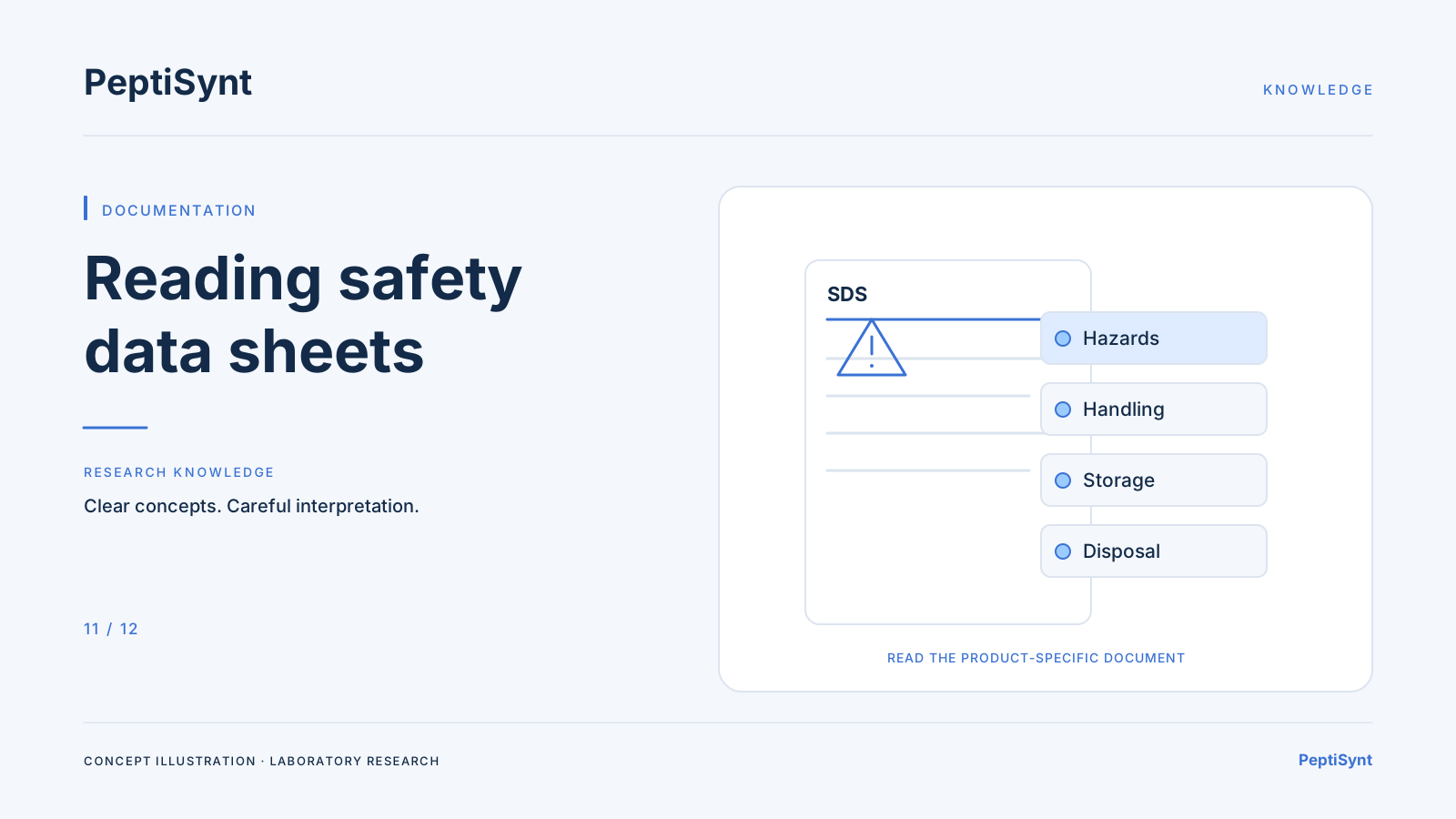
PeptiSynt uses the safety data sheet to identify what is known, what is uncertain and which controls need a qualified material-specific assessment.
Match the document to the material
Check the product identifier, composition information where supplied, issuing organization and revision date. A document for a different formulation or chemical form may not describe the material being handled. Keep its identifier with the receiving record.
An SDS organizes safety information; it is not a certificate of purity or a complete experimental protocol. An absence of detailed toxicological information should be recorded as a limitation rather than interpreted as proof that a material is harmless.
Know where to look
OSHA’s Appendix D describes the familiar SDS section structure. Useful starting points include identification, hazard information, first aid, accidental release, handling and storage, exposure controls, stability and reactivity. Applicable requirements and the institution’s procedures depend on the setting; this overview is not a jurisdiction-specific compliance determination.
Qualified laboratory staff should evaluate the exact material, quantities, equipment and work being proposed. Select controls, protective equipment, waste arrangements and incident procedures through that assessment instead of relying on a generic online checklist.
Turn the review into an actionable record
Record the SDS version reviewed, the planned work, open questions and the person responsible for resolving them. Keep the location of the institution’s relevant procedures accessible to the team. If the document is ambiguous, obtain clarification from the responsible supplier or safety personnel before treating an assumption as established information.
Frequently Asked Questions
Is an SDS a substitute for the COA?
No. Safety information and analytical batch results serve different purposes.
Does research-use labeling establish that handling is risk-free?
No. Research materials still require an appropriate material-specific laboratory safety assessment.
Sources and further reading
Continue reading
For laboratory research use only. Not for human or animal use.